


Personal Religion In Egypt Before Christianity
Publisher: Harper and Brothers
Format: Hardback
ISBN: none
Some books merely discuss religion. Personal Religion in Egypt before Christianity arrives from 1909 intent on doing something rather more intriguing: peering past temples, dynasties, monuments and official ritual to ask what ordinary ancient Egyptians may actually have believed, feared, hoped for and prayed about when nobody was building a pyramid for the occasion. Which is, when you think about it, a wonderfully human question and exactly the sort of thing that makes old scholarship unexpectedly alive.
Written by W. M. Flinders Petrie, one of the great names of Egyptology, this is not a sensational treasure-hunting volume full of mummies springing out of cupboards to alarm the careless. Petrie was a serious scholar, and his interest here lies in the quieter, more intimate side of ancient religion: not just gods in their official splendour, but belief as it may have been experienced in households, private acts of devotion, personal anxieties, and the small-scale spiritual negotiations by which human beings have always tried to make sense of life, death, luck, illness and the alarming size of the universe.
That is what gives the book its enduring appeal. Ancient Egypt is so often presented in monumental form — colossal statues, elaborate tombs, priests, kings, processions, and enough stone to last several eternities — that one can forget it was also inhabited by actual people with private concerns. Petrie, with admirable seriousness, turns attention toward those concerns. The result is a book that feels less like a parade of antiquities and more like an attempt to recover the texture of belief itself: how religion worked not only as public ceremony, but as something personal, immediate, and emotionally necessary.
Published in 1909 by Harper and Brothers, this volume belongs to that golden age of learned books when scholars still wrote with the confidence that readers might willingly follow them into specialised subjects provided the subject was important enough and the tone properly authoritative. There is something deeply pleasing about that old-world intellectual assurance. This is a book from a time when the educated public was expected to be curious about Egyptian religion, comparative belief, and the history of civilisation, and the publisher was prepared to bind that curiosity in solid cloth and send it out into the world.
Petrie himself is part of the attraction. Few figures loom larger in the development of modern archaeology in Egypt, and books by him carry a certain gravitas even when later scholarship has revised details here and there. He represents that formidable generation of scholar-explorers who combined genuine intellectual ambition with the kind of practical determination required to spend large portions of life dealing with ancient dust, broken objects and the awkward logistics of the desert. Reading him now is partly an encounter with Egypt, and partly an encounter with the history of how Egypt was studied.
There is also a delicious irony in the title. “Personal religion” sounds so modest, almost domestic, yet the subject opens out into the vastest possible themes: gods, souls, afterlife, morality, fate, divine favour, and humanity’s longstanding refusal to accept that existence can simply remain unexplained. The book promises intimacy and then quietly delivers civilisation. It is a reminder that the biggest questions are often smuggled in under the most restrained headings.
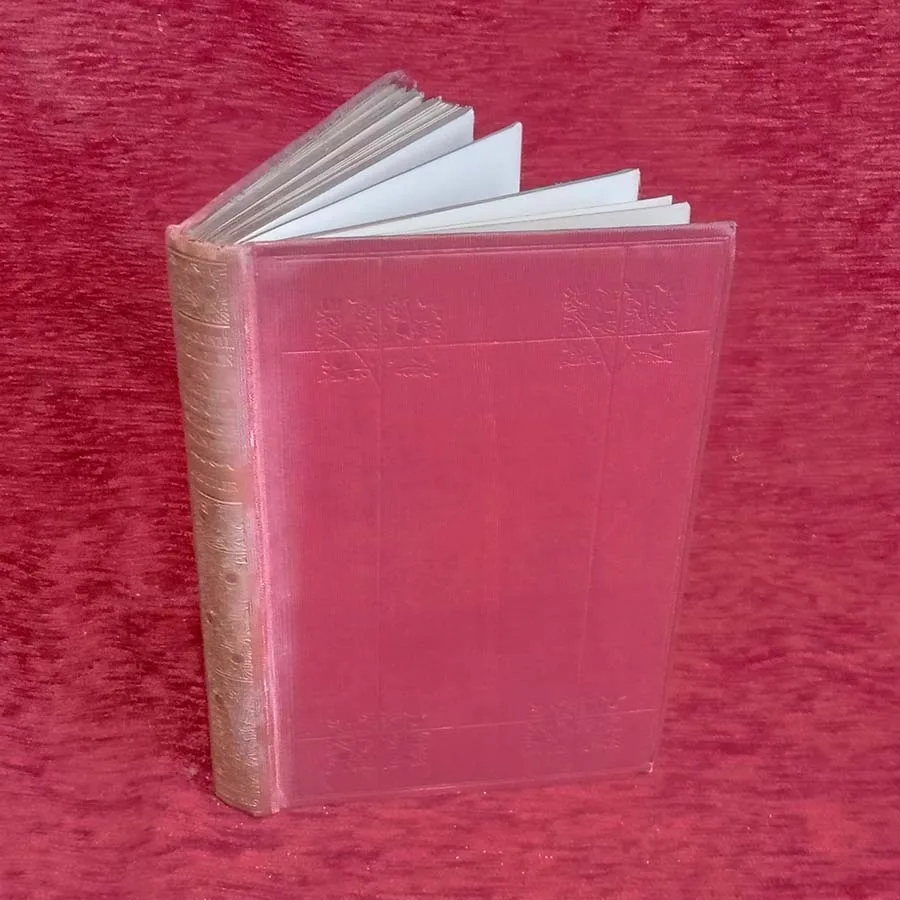
This 1909 copy, in Good condition, has exactly the right sort of age about it. The fading to the spine, as visible in the image, only adds to the atmosphere. It looks like a proper Edwardian scholarly book should look: dignified, slightly softened by time, and entirely untroubled by the passing of more than a century. A faded spine on a book about ancient religion feels almost suitable, as though it has spent decades quietly contemplating continuity, mortality and the persistence of belief from a shelf in a serious room.
And serious it is, though never merely dry. Books like this have a peculiar appeal to modern readers because they combine subject-matter of genuine fascination with the tone of an era that believed scholarship itself had style. Even when one disagrees with a conclusion or notices the date of the scholarship, one still enjoys the authority, the breadth of vision, and the sense that learning is being pursued in earnest. There is no modern desperation to entertain every five seconds. Petrie expects the reader to care, and somehow that makes one care more.
For collectors and readers alike, this is a highly attractive volume: part Egyptology, part religious history, part Edwardian intellectual artifact. It will appeal to those interested in ancient belief systems, early archaeology, comparative religion, or simply the pleasure of owning an old book that looks as though it ought to belong in a library with ladders and stern busts of classical figures.
In short, Personal Religion in Egypt before Christianity is a wonderfully thoughtful old study of one of the most compelling subjects imaginable: what ancient Egyptians believed when belief became personal. This 1909 Harper and Brothers copy, in Good condition with spine fading, is a fine Crappy Old Books survivor — scholarly, atmospheric, and carrying the quiet thrill of a book that asks not merely how a civilisation worshipped, but how its people hoped.
Keep browsing: See more Religion books Other books by WM Flinders Petrie
